Contact us
Products / Types of sensors
  • Temperature Sensors

    Sensors for measuring temperature.

  • Wireless Sensors

    Wireless battery sensors

  • Humidity + Temperature

    Humidity + temperature sensors

  • Duct Sensors

    Duct sensors optimize ventilation.

  • Industrial Sensors

    Industrial sensors ensure reliability.

  • VOC + humidity

    VOC + humidity sensors
  • CO2 + temperature

    CO2 + temperature sensors

  • CO₂ + VOC

    CO2+VOC sensors

  • Accessories

    Accessories facilitate the installation of sensors.

  • Refrigerant Leak Sensors

    Sensors for detecting refrigerant leaks.

  • Radon Sensors

    Radon sensors for direct ventilation control.

  • PMx Sensors

    PMX sensors monitor dust particles.

  • CO2 sensors

    CO2 sensors for air quality monitoring.

  • CO2 + humidity

    CO2 + humidity sensors

  • VOC Sensors

    VOC sensors detect harmful substances.

  • RH Sensors

    RH sensors measure relative humidity.

Latest news
    The Impact of VOCs on Health and Productivity in the Workplace


What are the main indoor air pollutants?

Pollutants / substances in indoor environments - woman with a stuffy nose

CO2 as a good indicator of air pollution

When people are in an enclosed space without adequate ventilation, the concentration of harmful substances in the air increases, as does the concentration of CO2. For this reason, measured values of carbon dioxide are mainly used to assess the level of indoor air pollution.

Carbon dioxide is therefore primarily an indicator suitable for effective control of ventilation systems in spaces where people frequently and for extended periods (schools, kindergartens, shopping malls, offices, living rooms, bedrooms, children’s rooms…) stay. However, the main air pollutants are so-called volatile organic compounds.


What are volatile organic compounds or VOC?

They are various types of organic compounds that are in a gaseous state at normal temperatures. It is estimated that there are around ten thousand types of volatile organic compounds.
VOCs can have a negative impact on health and well-being.

They can simply be divided into two groups:

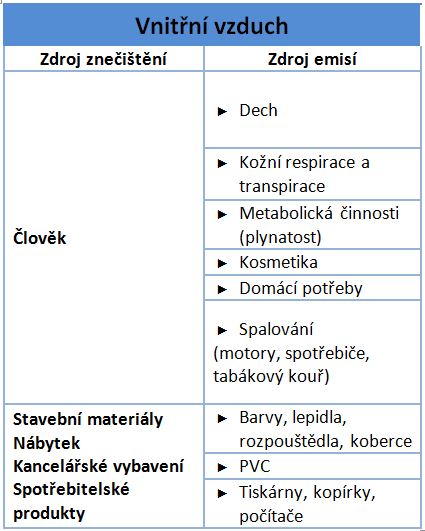
  1. Bio-waste substances – produced during the metabolic activity of living organisms (breath, sweat, etc.) or, for example, during cooking, baking, etc.
  2. Emissions from building materials, furniture, carpets, cleaning agents, or cosmetic products, paints, etc.
Main manifestations include:
  • discomfort
  • decreased concentration ability
  • drowsiness, fatigue
  • headaches
  • irritation of the eyes or even dizziness

These are essentially the pollutants for which ventilation is primarily needed (odors). VOC sensor is therefore most similar to the perception of odors by the human nose. In the table on the right, take a look at the main sources of VOC.

Table of main sources of VOC


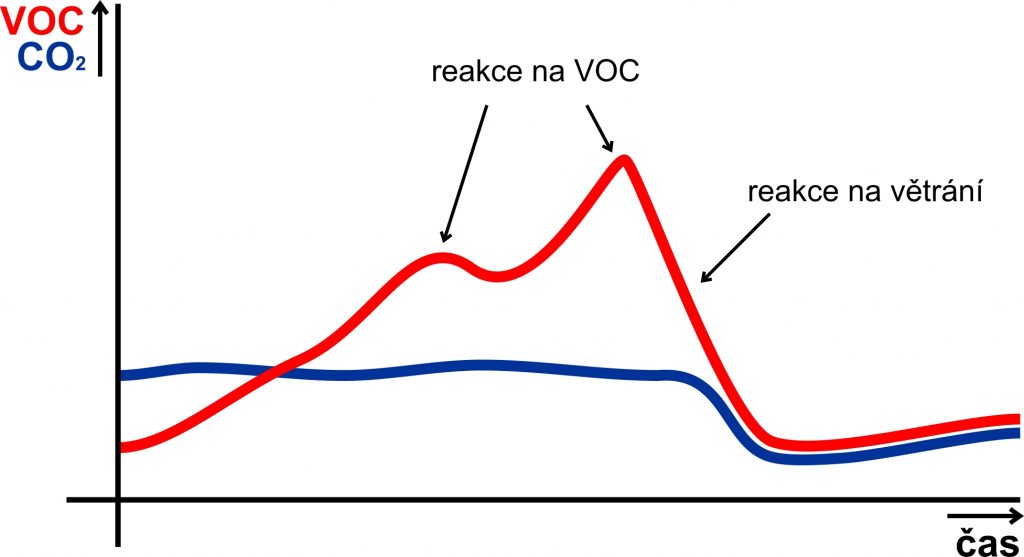
What to do in a space where there is an odor, but the CO2 concentration may be fine?

It is always necessary to choose the type of sensor according to the predominant use of the specific space. For example, in restrooms, kitchens, locker rooms, or fitness centers, the CO2 level is often fine despite unpleasant odors, thus necessitating ventilation.

A similar situation can also occur in new buildings, where upon entering you can smell odors from paints, furniture, etc. This phenomenon is called SBS = Sick Building Syndrome (for more on SBS, see here).

*CO2 = carbon dioxide, a colorless gas with no odor
*VOC = Volatile Organic Compounds

You can find the entire range of sensors here